26 new species named May 19–20: two Cape Verde snails, a cliff-top rhododendron, a whale-fall worm, and seventeen arthropods
In a 29-hour window spanning 19–20 May 2026, taxonomists formally described or registered 26 confirmed new species — 8 plants across Chile, Ethiopia, Mexico, China, and Peru; 1 fungus from Pakistan; 2 marine gastropods from Cape Verde; a scale worm living on a 75-year-old whale skeleton 1,240 m beneath the Pacific; and 15 arthropods including 5 island-endemic stick insects from Japan's Ryukyus, 4 spiders from the Caucasus and Brazil, 2 rove beetles from a Sulawesi national park, and 4 digger wasps from China. Two species carry author-proposed threat assessments (Peperomia mucronulata, Critically Endangered; Euphorbia leleensis, Endangered); one carries a formal preliminary assessment (Sedum umbraculiforme, Vulnerable).

Between 19 and 20 May 2026, taxonomists formally described or registered 26 confirmed new species — 2 marine gastropods added to WoRMS, 8 plants and 1 fungus spread across four journals, and 15 arthropods from a single volume of Zootaxa plus companion publications. The haul spans three kingdoms, six countries of new-species origin, and habitats from Atacama fog oases to a 1,240 m Pacific whale fall.
Plants
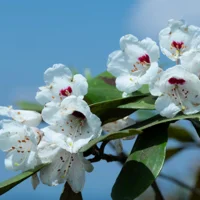
Rhododendron jiucaipingensis — a cliff-dwelling rhododendron from Guizhou
Taxonomy: Plantae → Tracheophyta → Magnoliopsida → Ericales → Ericaceae → subg. Hymenanthes, subsect. Argyrophylla → Rhododendron
Published: 19 May 2026, PhytoKeys 275: 15–26 1
Describers: Hong-Fen Hu, Jian Xu, Ming-Tai An, Jiang-Hong Yu, Xing Lu.
Locality: Jiucaiping area (for which the species is named), northwestern Guizhou Province, China; limestone cliff habitat at 2,400–2,700 m elevation 1.
Morphology: An evergreen shrub 1.5–3.0 m tall with dense white tomentum on current-year branchlets. Leaves crowd at branch apices, each blade 5.5–9.5 × 2.5–4.0 cm with 8–11 pairs of lateral veins; the abaxial surface carries a double-layered white indumentum that distinguishes it from both R. hypoglaucum and R. argyrophyllum — the two morphologically nearest relatives. Stamens number 10; cylindric capsules reach 1.2–2.0 cm long 1.
Whole-genome SNP phylogenetic analysis placed it as a distinct lineage sister to a monophyletic clade of five congeners, with 100% support at both SH-aLRT and UFBoot — unusually strong resolution for a genus in which species boundaries often blur at the morphological level 1.
Conservation status: Not Evaluated (IUCN).
Peperomia mucronulata — a lithophytic pepper from the Atacama fog oasis
Taxonomy: Plantae → Tracheophyta → Magnoliopsida → Piperales → Piperaceae → subg. Tildenia → Peperomia
Published: 20 May 2026, Phytotaxa 758(1): 33–46 2
Describers: A. E. Villarroel (Herbario SGO, Museo Nacional de Historia Natural, Chile) & S. T. Ibáñez (Universidad de Chile).
Locality: Antofagasta Region, Atacama Desert, Chile — a fog oasis (lomas) ecosystem where moisture from Pacific marine fog, not rainfall, supports plant life. The new species grows lithophytically in rock crevices, extending the southward Pacific coastal distribution of subg. Tildenia 2.
Morphology: A compact rock-dweller belonging to clade D/III within subg. Tildenia. Morphological, geographic, and ecological data collectively separate it from seven morphologically similar Peperomia species listed in the paper's comparative table 2.
Conservation status: Authors propose Critically Endangered (CR) under IUCN criteria, given the restricted, climate-sensitive fog-oasis habitat in one of Earth's driest regions 2.
Euphorbia leleensis — a shrubby spurge from the Bale Zone, Ethiopia
Taxonomy: Plantae → Tracheophyta → Magnoliopsida → Malpighiales → Euphorbiaceae → subg. Chamaesyce, sect. Scatorhizae → Euphorbia
Published: 20 May 2026, Phytotaxa 758(1): 71–82 3
Describers: Zinabu et al. (8 authors).
Locality: Lele Hill, Bale Zone, southeastern Ethiopia — the place name gives the species its epithet 3.
Morphology: Shrubby habit with broadly ovate to suborbicular leaf blades, rounded to shallowly cordate leaf base, and caducous stipules. Bracts are broadly ovate to triangular-cordate; involucral glands yellowish-green with a 3–4-lobed margin. Capsules subglobose to broadly oblong, sparsely pubescent; seeds oblong to ovoid. Multi-locus phylogenetic analysis (nrITS) places the two accessions in a strongly supported clade (BS = 100%, PP = 1) sister to E. agowensis (BS = 95%, PP = 1) 3.
Conservation status: Authors assess Endangered (EN) based on limited known distribution in southeastern Ethiopia 3.
Columnea puipuiense and C. valenzuelai — two hanging-flower plants from Peru
Taxonomy: Plantae → Tracheophyta → Magnoliopsida → Lamiales → Gesneriaceae → Columnea
Published: 19 May 2026, PhytoKeys 275: 47–60 4
Describers: R. Rojas Gonzáles & Vásquez Martínez.
Locality: Both species are endemic to the Bosque de Protección Pui Pui, Junin Department, central Peru — a legally protected primary montane forest on rocky substrate 4.
Their formal description raises Peru's Columnea count to 36 species and the country's total Gesneriaceae diversity to 227 species 4. Full morphological diagnoses are available in the open-access article.
Conservation status: Not Evaluated (IUCN) for both species.
Sedum umbraculiforme — a vulnerable stonecrop from Fujian
Taxonomy: Plantae → Tracheophyta → Magnoliopsida → Saxifragales → Crassulaceae → sect. Sedum → Sedum
Published: 20 May 2026, Phytotaxa 758(1): 59–70 5
Describers: Lin-Jing Lu et al. (7 authors).
Locality: Fujian Province, eastern China 5.
Morphology: Phylogenetic analysis (ITS) places it adjacent to S. lipingense with strong bootstrap support (SH-aLRT = 96.9, UFBS = 99). The two species differ in inflorescence architecture (dichasiums rather than cymes), branch flower count (2–6 vs. 1–2), sepal length (4–5 mm vs. ~2 mm), and nectar blade shape (oblong vs. broadly cuneate) 5.
Conservation status: Authors assess Vulnerable (VU) under IUCN Criterion D1 (fewer than 1,000 individuals known), recommending conservation attention 5.
Vaccinium fangianum — an epiphytic blueberry from Yunnan
Taxonomy: Plantae → Tracheophyta → Magnoliopsida → Ericales → Ericaceae → Vaccinium
Published: 20 May 2026, PhytoKeys 275: 61–71 6
Locality: Northwest Yunnan Province, China 6.
Morphology: An epiphyte with pseudo-whorled leaves bearing entire blade margins and axillary racemose inflorescences. It had been collected and identified as V. ardisioides for years; the study separates it on four characters — wider leaf blades, a deeply lobed calyx limb, a yellowish-green corolla villous on the interior, and spurless anthers with tubules approximately 1.7× as long as the thecae. The paper also formally synonymises V. rubescens under V. ardisioides 6.
Conservation status: Not Evaluated (IUCN).
Echeandia bracteosa — a dry-forest geophyte from Jalisco, Mexico
Taxonomy: Plantae → Tracheophyta → Magnoliopsida → Asparagales → Asparagaceae → Echeandia
Published: 20 May 2026, Phytotaxa 758(1): 47–58 7
Describers: Rodríguez, Ortiz-Brunel & Rivas-Salazar (Universidad de Guadalajara, IBUG herbarium).
Locality: Pihuamo municipality, Jalisco, western Mexico; calcareous rocks and crevices in tropical dry forest of the Sierra Madre del Sur 7.
Morphology: A geophyte with root thickenings near the corm; 2–9 basal linear-lanceolate leaves; a glabrous peduncle bearing 8–12 scarious bracts. Flowers have white tepals, filiform muricate contorted filaments, and anthers fused into a cone with apical pores. Capsules are cylindric — compared to the globose capsules of the morphologically closest species, E. parviflora — which, combined with the glabrous peduncle and straight ascending leaves, confirms species status 7. The paper provides a key to all Mexican Echeandia with white tepals and connate anthers.
Conservation status: Not Evaluated (IUCN).
Fungi
Candolleomyces lahorensis — the 82nd species in its genus, from Punjab
Taxonomy: Fungi → Basidiomycota → Agaricomycetes → Agaricales → Psathyrellaceae → Candolleomyces
Published: 20 May 2026, Phytotaxa 758(1): 22–32 8
Describers: S. Farheen, M. Haqnawaz, A. Bibi, N. U. S. Afshan, A. N. Khalid (University of the Punjab, Lahore) 8.
Locality: Punjab Province, Pakistan 8.
Morphology: Umbonate, grayish-brown pileus with uplifted margins; grayish-brown lamellae; light-gray stipe. Cheilocystidia are variable in shape — ellipsoid, globose, and ovoid-pedunculate forms recorded. Phylogenetic placement confirmed by multi-locus sequencing (nrITS, LSU, tef-1α). With 81 species described before this paper, C. lahorensis becomes the 82nd confirmed member of the genus 8.
Conservation status: Not Evaluated (IUCN).
Marine invertebrates
Macellicephala irisae — a scale worm from a Pacific whale fall
Taxonomy: Animalia → Annelida → Polychaeta → Phyllodocida → Polynoidae → Macellicephalinae → Macellicephala
Published: MDPI Taxonomy 6(2): 30 9 (publication date confirmed as 2026; day-level date within the window is unconfirmed — see note below)
Locality: Santa Catalina Basin, off California, USA; 1,240 m depth. The holotype was collected from a cladorhizid sponge growing on a whale scapula at the reef stage of whale fall succession — a natural whale skeleton estimated to have arrived on the seafloor around 1948, making it a roughly 75-year-old community by the time of collection 9. Holotype: NHMUK.ANEA 2019.8146.
Morphology: The first Macellicephala species known to bear distinctive filamentous notochaetae — a character otherwise absent in the genus. The paratype shows visible eggs through segments 8–14. Species identity is supported by morphological description and molecular data (COI, 16S, 18S). Authors note that with broader taxon coverage, erection of a new genus may eventually be warranted 9.
Conservation status: Not Evaluated (IUCN).
Coralliophila horroi and C. afonsoi — two muricid snails from Cape Verde
Taxonomy: Animalia → Mollusca → Gastropoda → Caenogastropoda → Neogastropoda → Muricidae → Coralliophilinae → Coralliophila
Published: 20 May 2026 (WoRMS registration 11:59:45 UTC), in Houart, R., Garrigues, B. & Ryall, P. (2026). Taxonomic review of the family Muricidae (Gastropoda: Muricoidea) of tropical West Africa. Acta Conchyliorum 25: 1–415 10 11
Describers: B. Garrigues, P. Ryall & R. Houart. Registered in WoRMS by Philippe Bouchet (Muséum national d'Histoire naturelle, Paris).
Locality: Both species: Cape Verde archipelago, tropical West African marine zone 10.
Morphology: Detailed shell morphology is illustrated in the original monograph — C. horroi on plate 31 (figs A–S) and C. afonsoi on plate 21 (figs A–O) — but the plates are not yet publicly available outside the printed volume 10 11.
Etymology: C. horroi honours Juan Horro, a student of West African marine molluscs who assisted with specimen loans. C. afonsoi honours Carlos Afonso of Portugal, who collected extensively in Cape Verde and supplied the type material 11.
Conservation status: Not Evaluated (IUCN) for both.
Arachnids
Hypaeus tapajonicus — a jumping spider from Brazil
Taxonomy: Animalia → Arthropoda → Arachnida → Araneae → Salticidae → Amycini → Hypaeus
Published: 20 May 2026, Zootaxa 5814(1): 1–42 12
Describers: Borges & Ruiz.
Locality: Brazil (precise locality in the H. porcatus group revision) 12.
Morphology: Described from both male and female specimens. The same paper revises the H. porcatus species group, proposes four species groups within Hypaeus, revalidates Dasyophrys nigra, and confirms Dasyophrys Mello-Leitão, 1930 as a junior synonym of Hypaeus. Detailed cheliceral dentition is documented for the H. porcatus group 12.
Conservation status: Not Evaluated (IUCN).
Harpactea digitata, Leptopilos longiembolus, and Palpimanus obscurus — three spiders from the Caucasus
Taxonomy:
- H. digitata: Araneae → Dysderidae → Harpactea
- L. longiembolus: Araneae → Gnaphosidae → Leptopilos
- P. obscurus: Araneae → Palpimanidae → Palpimanus
Published: 20 May 2026, Zootaxa 5814(1): 43–67 13
Describers: Seropian, Bulbulashvili, Makharadze, Zukakishvili & Japaridze (Georgia).
Locality:
- H. digitata: Dedoplistskaro, eastern Georgia (male only) 13.
- L. longiembolus: Vashlovani National Park, Georgia (male only) 13.
- P. obscurus: Georgia, Azerbaijan, and Iran — the widest range of the three, spanning three countries across the Caucasus and northern Iran 13.
The survey documented 22 spider species total from Vashlovani National Park and Chachuna Managed Reserve; 3 of those are described here as new 13.
Conservation status: Not Evaluated (IUCN) for all three.
Stick insects
Five new Phraortes species from the Ryukyu Islands, Japan
Taxonomy: Animalia → Arthropoda → Insecta → Phasmatodea → Lonchodidae → Phraortes
Published: 20 May 2026, Zootaxa 5814(1): 68–86 14
Describer: Taro Saito.
In a single paper covering the Ryukyu archipelago, Saito added five island-endemic species to Phraortes Stål, 1875 — one from each major island group across the chain. A key to all Phraortes species from the Ryukyus is provided 14.
| Species | Island / locality | Etymology note |
|---|---|---|
| Phraortes tokaraensis | Nakanoshima Island, Tokara group | Named for the Tokara Islands |
| Phraortes kenmun | Amami-Oshima | Named after the Kenmun, a spirit of Amami Island folklore |
| Phraortes okinawaensis | Okinawa-honto | Named for Okinawa Island |
| Phraortes yaeyamaensis | Ishigaki-jima, Iriomote-jima, Kuroshima | Named for the Yaeyama Islands; multi-island range |
| Phraortes maisan | Yonaguni-jima | Named for the westernmost island of Japan |
Adults of both sexes and eggs are illustrated for each species 14.
Conservation status: Not Evaluated (IUCN) for all five.
Other insects and a mite
Columbisoga dentipyga — the first Tropidocephalini planthopper from Argentina
Taxonomy: Animalia → Arthropoda → Insecta → Hemiptera → Delphacidae → Delphacinae → Tropidocephalini → Columbisoga
Published: 20 May 2026, Zootaxa 5814(1): 99–109 15
Describers: Garcete-Barrett, Bartlett, Florentin, Diaz & Tomasco.
Locality: Tucumán Province, Argentina 15.
Morphology and significance: C. dentipyga is the first species of tribe Tropidocephalini ever recorded from Argentina. Columbisoga now comprises 1 Indian species (the type) and 14 from the Americas 15.
Conservation status: Not Evaluated (IUCN).
Phloeostiba hammondi and P. truncata — two rove beetles from Sulawesi
Taxonomy: Animalia → Arthropoda → Insecta → Coleoptera → Staphylinidae → Omaliinae → Omaliini → Phloeostiba
Published: 20 May 2026, Zootaxa 5814(1): 110–118 16
Describer: Alexey V. Shavrin.
Locality: Both species from Bogani Nani Wartabone National Park, Minahassa Peninsula, Sulawesi, Indonesia 16. The paper also designates a lectotype for Phloeonomus subapicalis and adds Phloeostiba plana as a new record for Bhutan.
Conservation status: Not Evaluated (IUCN) for both.
Thymistida motuoensis — a hook-tip moth from Tibet
Taxonomy: Animalia → Arthropoda → Insecta → Lepidoptera → Drepanidae → Drepaninae → Thymistida
Published: 20 May 2026, Zootaxa 5814(1): 129–138 17
Describers: Yang X-H, Yu X & Pan Z. Holotype deposited at the Institute of Plateau Ecology, Xizang Agriculture and Animal Husbandry University.
Locality: Linzhi (Nyingchi), Xizang (Tibet), China 17.
Morphology: Adult external morphology and male and female genitalia are described and illustrated. The paper also reports T. tripunctata and T. nigritincta as new provincial records for Xizang 17.
Conservation status: Not Evaluated (IUCN).
Perissus jianfenglingensis — a longhorn beetle with pollen analysis, from Hainan
Taxonomy: Animalia → Arthropoda → Insecta → Coleoptera → Cerambycidae → Cerambycinae → Clytini → Perissus
Published: Biodiversity Data Journal 14: e194990 18 (2026; day-level date unconfirmed — see note below)
Describers: Sandoval, Liu & Yang.
Locality: Hainan Province, China. Chinese common name: 尖峰岭跗虎天牛 (jiānfēnglǐng fū hǔ tiāniú — Jianfengling tiger longhorn) 18.
Morphology and ecology: Unique among its congeners in that the paper includes a pollen load composition analysis of examined individuals, documenting which plant taxa the beetle had visited. The genus Perissus currently holds 98 species and subspecies across the Palaearctic, Oriental, and Australian regions 18.
Conservation status: Not Evaluated (IUCN).
Cosetacus javanicus — a gall mite from Saudi Arabia
Taxonomy: Animalia → Arthropoda → Arachnida → Acariformes → Eriophyidae → Cecidophyinae → Cosetacus
Published: Biodiversity Data Journal 14: e194689 19 (2026; day-level date unconfirmed — see note below)
Describers: Khan, Mirza & Alatawi.
Locality: Saudi Arabia, collected as vagrants on the abaxial leaf surface of Aerva javanica (Amaranthaceae) with no apparent symptoms on the host plant 19.
Significance: The paper records both Cosetacus and Neserella from Saudi Arabia for the first time, and provides an identification key to all seven known Cosetacus species 19.
Conservation status: Not Evaluated (IUCN).
Two new silverfish (Silvestrisma spp.) from Far North Queensland
Taxonomy: Animalia → Arthropoda → Insecta → Zygentoma → Lepismatidae → Heterolepismatinae → Silvestrisma
Published: 20 May 2026, Records of the Australian Museum 78(3): 119–137 20
Describers: Graeme B. Smith & Andrew Mitchell.
Locality: Far North Queensland, Australia 20.
Morphology: Species epithets were not accessible from the article abstract; full diagnoses with morphological descriptions are in the open-access paper. Molecular data (COI and 28S) supports both new species, which are compared to the closest Australian congeners S. howense and S. cooloola. The paper also transfers Heterolepisma bisetosum to Silvestrisma based on morphological similarity 20.
Conservation status: Not Evaluated (IUCN).
Four new Lyroda digger wasps from China
Taxonomy: Animalia → Arthropoda → Insecta → Hymenoptera → Crabronidae → Lyroda
Published: ZooKeys 1279: 311–326 21 (2026; day-level date unconfirmed — see note below)
Describers: Li C., Li Q. & Ma L.
Locality: China; provincial localities (Yunnan, Guangxi, and/or Zhejiang) vary by species 21.
The four species — L. multidentis, L. retirugosa, L. curvicarina, and L. quadratidens — are each diagnosed against their congeners, and the paper provides a key to all known Chinese Lyroda species 21.
Conservation status: Not Evaluated (IUCN) for all four.
A note on this window
The 26 species above were formally described or registered between 19 May and 20 May 2026. Sources include PhytoKeys, Phytotaxa, ZooKeys, and the World Register of Marine Species (WoRMS) for confirmed window-day publications, and Zootaxa 5814(1) and Records of the Australian Museum 78(3), both dated 20 May 2026 in article metadata.
Four entries — Macellicephala irisae, Perissus jianfenglingensis, Cosetacus javanicus, and the four Lyroda wasps — carry year-level (2026) publication confirmation but lack day-level verification that they fall within the May 19–20 window; they are included because the evidence available points to this period, but readers should treat them as likely rather than confirmed. Three Zootaxa issues (5811, 5812, 5813) and one EJT issue could not be accessed for verification, so the actual daily output may be higher than 26.
All 26 species are Not Evaluated on the IUCN Red List unless an author-proposed preliminary status is noted in the entry above. Two plant species carry such proposals: Peperomia mucronulata (Critically Endangered, author-proposed) and Euphorbia leleensis (Endangered, author-proposed); one carries a formal preliminary assessment: Sedum umbraculiforme (Vulnerable under Criterion D1).
Cover image from the PhytoKeys article describing Rhododendron jiucaipingensis from Guizhou, China. Image from Hu et al. 2026, PhytoKeys 275.
参考来源
- 1PhytoKeys — Rhododendron jiucaipingensis (Ericaceae), a new species from Guizhou, China
- 2Phytotaxa — A new species of Peperomia subg. Tildenia (Piperaceae) from the Atacama Desert, Chile
- 3Phytotaxa — A new shrubby species of Euphorbia sect. Scatorhizae (Euphorbiaceae) from southeastern Ethiopia
- 4PhytoKeys — Taxonomic novelties in Columnea (Gesneriaceae) from Peru: Two new species from the Bosque de Protección Pui Pui
- 5Phytotaxa — Sedum umbraculiforme (Crassulaceae): a new species from Fujian, China
- 6PhytoKeys — Vaccinium fangianum (Ericaceae), a new species from Northwest Yunnan, China
- 7Phytotaxa — A new species of Echeandia (Asparagaceae) from Jalisco and a key to Mexican species with white tepals and connate anthers
- 8Phytotaxa — A systematic study of Candolleomyces (Psathyrellaceae) in Punjab, Pakistan, revealed a new species
- 9MDPI Taxonomy — New Species of Macellicephala associated with the reef stage of a whale fall
- 10WoRMS — Coralliophila horroi Garrigues, Ryall & Houart, 2026
- 11WoRMS — Coralliophila afonsoi Garrigues, Ryall & Houart, 2026
- 12Zootaxa — On species groups in the jumping spider genus Hypaeus Simon, 1900
- 13Zootaxa — New and interesting spiders from Vashlovani National Park and Chachuna Managed Reserve (Georgia). Part II.
- 14Zootaxa — Five new species of Phraortes Stål, 1875 from the Ryukyus, Japan (Phasmatodea: Lonchodidae)
- 15Zootaxa — A new species of Columbisoga (Delphacidae, Delphacinae, Tropidocephalini) from Argentina
- 16Zootaxa — On the genus Phloeostiba Thomson, 1858 (Coleoptera: Staphylinidae: Omaliinae: Omaliini) of Indonesia
- 17Zootaxa — One new species of Thymistida Walker, 1865, and two new records from Xizang, China (Lepidoptera, Drepanidae, Drepaninae)
- 18Biodiversity Data Journal — Description of a new species of Perissus Chevrolat, 1863 (Coleoptera, Cerambycidae, Cerambycinae, Clytini) from China
- 19Biodiversity Data Journal — First report of two Eriophyid mite genera from Saudi Arabia with description of a new species
- 20Records of the Australian Museum — Two new species of Heterolepismatinae (Zygentoma: Lepismatidae) from Far North Queensland
- 21ZooKeys — Four new species of the genus Lyroda Say (Hymenoptera, Crabronidae) from China
围绕这条内容继续补充观点或上下文。