11 new species named May 22–23: a Texas mosasaur twice the length of a great white shark, a tree in its own new genus from Cretaceous France, and an Endangered Colombian cannonball-tree relative
A ~28.5-hour Saturday window (22–23 May 2026) yielded 11 confirmed new species — 3 animals, 5 plants, and 3 microorganisms — from seven journal sources. Headliners: Tylosaurus rex (Campanian Texas, 7.7–13.2 m, serrated teeth, the largest tylosaurine known), Acutodon villeveyracensis (new genus, France, pushes pan-shinisaurid lizards in Europe back ~30 million years to the Cretaceous), Gustavia caucana (Endangered cannonball-tree relative from Colombia's Cauca riparian forests), and Ingrithrix praediumpetri (new genus of cyanobacterium producing far-red chlorophylls d and f above 700 nm).

Between 22 and 23 May 2026, taxonomists formally described or registered 11 confirmed new species — 3 animals, 5 plants, and 3 microorganisms — from seven journal sources: Bulletin of the American Museum of Natural History, Journal of Vertebrate Paleontology, Acta Parasitologica (+ WoRMS), Phytotaxa 758(2), Kew Bulletin, Thai Forest Bulletin, and Current Microbiology. Saturday publication gaps at Zootaxa and the Pensoft family (ZooKeys, MycoKeys, PhytoKeys, BDJ) held, so this window skews heavily toward recent-publication fossils, Southeast Asian plants, and microbial novelties.
Animals
Tylosaurus rex Zietlow, Polcyn & Tykoski, 2026 — a gigantic serrated-toothed mosasaur from Texas
Taxonomy: Animalia → Chordata → Reptilia → Squamata → Mosasauridae → Tylosaurinae → Tylosaurus 1
Published: 21 May 2026, Bulletin of the American Museum of Natural History, no. 482 (77 pp.). Describers: Amelia Zietlow (American Museum of Natural History / History Museum at the Castle), Michael Polcyn (Southern Methodist University), Ronald Tykoski (Perot Museum of Nature and Science). Type locality: Lake Ray Hubbard, Dallas area, northern Texas, USA; holotype DMNH 1979-03, Perot Museum of Nature and Science. 1
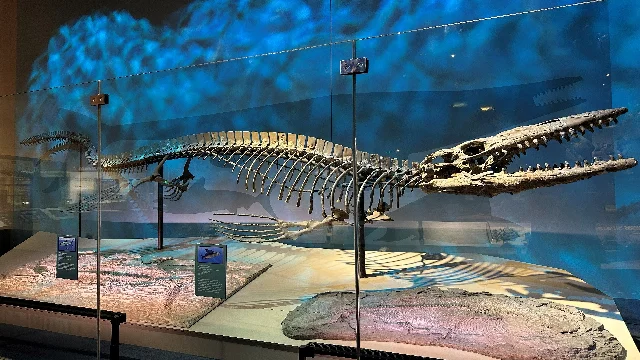
Age: Campanian, Upper Cretaceous, approximately 80 million years ago. Estimated length: 7.7–13.2 m (25–43 ft), making it one of the largest mosasaurs known and significantly larger than its closest relative T. proriger (3.9–9.5 m). 1 More than a dozen specimens previously identified as T. proriger were re-examined and referred to T. rex; the two species differ in geography (Texas vs. Kansas), stratigraphic age (roughly 4 million years younger), and several hard anatomical features.
The name rex was chosen to honour geologist John Thurmond, who in the late 1960s informally described these Texas specimens as "Tylosaurus thalassotyrannus" — sea tyrant — before formal naming was complete. 2 Two diagnostic features separate T. rex from all other tylosaurines: serrated teeth (rare among mosasaurs) and markedly enlarged jaw and neck muscle attachment surfaces. 1 Several specimens show healed bite marks on snout tips and fractured jaws consistent with intraspecific combat. Ron Tykoski described it as "a much meaner animal than other mosasaurs — besides being huge, roughly twice the length of the largest great white sharks." 2
Conservation status: Extinct (Cretaceous–Paleogene extinction event).
Acutodon villeveyracensis Jansen, Augé, Garcia, Otero & Valentin, 2026 — the oldest pan-shinisaurid lizard in Europe
Taxonomy: Animalia → Chordata → Reptilia → Squamata → Anguimorpha → Pan-Shinisaurus 3
Published: 2026, Journal of Vertebrate Paleontology, DOI: 10.1080/02724634.2026.2636649. Describers: Olivier Jansen, Marc Augé, Gabriel Garcia, Adán Pérez-García Otero, Xavier Valentin. Type locality: Villeveyrac (Hérault, France), Lolivet section, layer F1. Type specimen: UP.VIL.2010.55, an incomplete left maxilla, held at the Université de Poitiers. 3
Age: Lower Campanian, Upper Cretaceous, 83.5–79.5 Ma. The fossil comes from low-energy fluvial floodplain sediments — a freshwater subtropical environment. 3
The genus name means "sharp tooth" (Latin acutus + Greek ὀδόντος), describing the maxilla's tall, gradually tapering teeth: anterior teeth strongly recurved, posterior teeth nearly straight, no ridges or basal inflections. The upper jaw carries at least 16 teeth (approximately 20 estimated total), with a large first labial foramen elongated mesiodistally — a combination of characters that fits none of the described European Cretaceous anguimorphs. 3
Pan-Shinisaurus is the clade that gave rise to the living Chinese crocodile lizard (Shinisaurus crocodilurus), which survives today only in small populations in southern China and northern Vietnam. The previous oldest European record of this lineage was from the Late Paleocene — roughly 30 million years younger. Acutodon extends the group's European presence back to the Late Cretaceous, suggesting a Laurasian distribution stretching from China to western France by 80 Ma. 3

Conservation status: Extinct (Cretaceous).
Dermoergasilus planilizai Adday, Ali & Míč, 2026 — a gill parasite of Iraq's only freshwater mullet
Taxonomy: Animalia → Arthropoda → Crustacea → Hexanauplia → Copepoda → Cyclopoida → Ergasilidae → Dermoergasilus 4
Published: May 2026, Acta Parasitologica, Vol. 71(3), Article 107. DOI: 10.1007/s11686-026-01279-0. WoRMS registration: 22 May 2026, AphiaID 1892746. Describers: Thamir K. Adday, Atheer H. Ali (University of Basra, College of Agriculture, Iraq), Robert Míč (Masaryk University, Brno, Czech Republic). 5
Locality: Al-Gharraf River, southern Iraq (Tigris–Euphrates basin). Host: Planiliza abu (Heckel) — the only exclusively freshwater mullet (Mugilidae) in Mesopotamia. Attachment site: gills. 5
Four characters separate D. planilizai from its closest congener D. varicoleus: (1) caudal rami setae substantially longer than the digitiform processes; (2) leg 1 endopod terminal spine strongly curved; (3) leg 5 free segment approximately three times the length of the basis (vs. twice); (4) second and third antennal endopod segments together representing 41.6% of total antenna length (vs. 60%). 5
Conservation status: Not Evaluated (IUCN; invertebrate parasite).
Plants
Gustavia caucana Guzmán Z. et al., 2026 — an Endangered cannonball-tree relative from Cauca, Colombia
Taxonomy: Plantae → Tracheophyta → Magnoliopsida → Ericales → Lecythidaceae → Gustavia 6
Published: 22 May 2026, Phytotaxa 758(2): 146–154. DOI: 10.11646/phytotaxa.758.2.3. Describers: Wilmar Guzmán Z., Manuela Alzate L., Diego J. Macías P., Diego Macías S., Angie C. Caicedo N., Luis A. Camayo G., Jorge Becoche M., Juvenal E. Batista G. (eight authors). Type locality: Patía River valley riparian forest, Cauca Department, Colombia, 580–1,250 m. Distribution extends across the western slope of the Cordillera Central and eastern slope of the Cordillera Occidental. 6
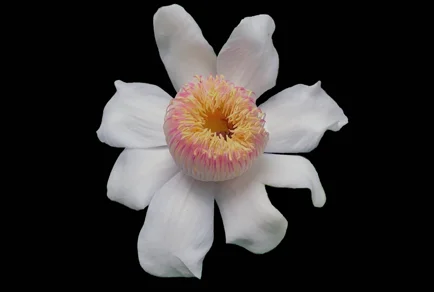
Gustavia (family Lecythidaceae) contains around 40 species of Neotropical trees related to the cannonball tree (Couroupita guianensis), known for large, showy flowers. G. caucana stands out from its closest relatives G. angustifolia and G. serrata in a suite of characters: leaf base cuneate to decurrent; petiole densely pubescent and often dotted; terminal inflorescence with a short rachis; sepals short and broad; style short; fruit with four distinct ridges. 6
The authors assessed the species as Endangered (EN) under IUCN criteria, citing restricted distribution, severely fragmented populations, and ongoing habitat loss from deforestation in the Cauca valley. 6
Conservation status: Endangered (EN) — author assessment.
Syzygium khammouanense V.S.Dang, Tagane & Soulad., 2026 — a limestone-karst myrtle from central Laos
Taxonomy: Plantae → Tracheophyta → Magnoliopsida → Myrtales → Myrtaceae → Syzygium 7
Published: 21 May 2026, Kew Bulletin (Springer). DOI: 10.1007/s12225-025-10351-3. Describers: Van-Son Dang (Vietnam Academy of Science and Technology, Ho Chi Minh City), Shuichiro Tagane (Kagoshima University Museum), Phetlasy Souladeth (National University of Laos), and eight co-authors. Type locality: Khounkham District, Khammouane Province, central Laos — limestone karst. 7
Syzygium is one of the largest flowering-plant genera, with over 1,200 species. S. khammouanense is distinguished by two characters unusual in the genus: 26–30 pairs of secondary veins and a strongly four-angled hypanthium (floral tube) approximately 1 cm long. Both features are clear enough to separate it from all other Lao and regional congeners in herbarium comparison. 7 The paper includes a provisional conservation assessment; the specific category was not accessible from the published abstract.
Conservation status: Provisional assessment included in paper; category not extractable from available public data.
Henckelia moniliformis Sirimongkol, Tetsana & Middleton, 2026 — a many-flowered gesneriad from northeastern Thailand
Taxonomy: Plantae → Tracheophyta → Magnoliopsida → Lamiales → Gesneriaceae → Henckelia 8
Published: 2026, Thai Forest Bulletin (Botany), Vol. 54 No. 1, pp. 58–63. DOI: 10.20531/tfb.2026.54.1.06. Describers: Sukontip Sirimongkol, Naiyana Tetsana (Forest Herbarium, Department of National Parks, Wildlife and Plant Conservation, Bangkok), David J. Middleton (Royal Botanic Garden Edinburgh). Type locality: Na Duang District, Loei Province, northeastern Thailand. 8
Henckelia comprises roughly 160 species of largely Southeast and South Asian gesneriads. H. moniliformis is morphologically closest to H. khasiana and H. oblongifolia, but separates from both by its inflorescences bearing up to 30 flowers (occasionally more) — a substantially higher flower count than those relatives. The species epithet moniliformis ("necklace-shaped") likely refers to the multi-flowered inflorescence chain. 8 The paper includes an IUCN assessment; the specific category was not accessible from the available public data.
Conservation status: Assessment included in paper; category not extractable from available public data.
Riccia laevispora Mufeed, Manju & Cargill, 2026 — a liverwort with smoothly punctate spores from India's Western Ghats
Taxonomy: Plantae → Marchantiophyta → Marchantiopsida → Marchantiales → Ricciaceae → Riccia 9
Published: 22 May 2026, Phytotaxa 758(2): 167–176. DOI: 10.11646/phytotaxa.758.2.5. Describers: Bavusantekath Mufeed, Chandrasekharan Nair Manju (both Kerala, India), Dale Christine Cargill (Australia). Type locality: Kas Plateau area, Satara District, Maharashtra, Western Ghats, India. 9
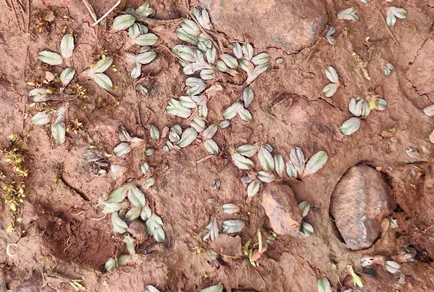
Riccia (liverwort genus, Marchantiophyta) contains roughly 200 species worldwide. R. laevispora grows as a flat, ribbon-like thallus that is green–white bicolored — similar in appearance to R. singularis, but the white areas arise from a different anatomical cause in the two species. The species is diagnosed primarily by its spore ornamentation: spores smooth and glossy (hence laevispora, "smooth-spored"), the entire surface covered in punctae (tiny depressions), surrounded by broad, low spore ridges approximately 5 µm wide; ridge walls occasionally incomplete, forming larger punctae. 9
The Kas Plateau (a UNESCO World Heritage site) hosts seasonally waterlogged basaltic rock outcrops — habitat for lithophytic liverworts and the famous seasonal wildflower blooms of the Western Ghats. 9
Conservation status: Not Evaluated (IUCN).
Opuntia miquihuanensis Martínez-González et al., 2026 — a cryptic prickly pear from the Sierra Madre Oriental, Mexico
Taxonomy: Plantae → Tracheophyta → Magnoliopsida → Caryophyllales → Cactaceae → Opuntia 10
Published: 20 May 2026, MDPI Taxonomy 6(2): article 33. DOI: 10.3390/taxonomy6020033. Describers: César Ramiro Martínez-González, Tania Raymundo, Fortunato Garza-Ocañas, Leccinum J. García-Morales, Jaime Jiménez-Ramírez, Jesús García Jiménez. Type locality: Peña-Aserradero, Sierra Madre Oriental, Tamaulipas, Mexico. 10
Phylogenetic analysis of six plastid and nuclear markers (trnL-trnF, psbJ-petA, matK, ycf1, ppc, and ITS) places O. miquihuanensis as a distinct lineage within Opuntia s.str., cryptic under morphological examination alone. The name references Miquihuana, the municipality in Tamaulipas where the specimens were collected. 10 Full morphological data for the species were not accessible from the article detail page at time of writing.
Conservation status: Not Evaluated (IUCN).
Microorganisms
Ingrithrix praediumpetri Averina et al., 2026 — a new genus and species of far-red-light cyanobacterium
Taxonomy: Bacteria → Cyanobacteria → Nodosilineales → Nodosilineaceae → Ingrithrix gen. nov. 11
Published: 22 May 2026, Phytotaxa 758(2): 105–128. DOI: 10.11646/phytotaxa.758.2.1. Describers: Svetlana Averina, Elena Polyakova, Ekaterina Senatskaya, Olga Boldina, Alexander Pinevich. Source strains: Five "Leptolyngbya-like" CALU strains; freshwater habitat with low tolerance for elevated salinity. 11
The polyphasic classification is based on 16S rRNA, rpoC1, and rbcL phylogenetics alongside 16S–23S ITS secondary structure analysis. The new genus falls in Nodosilineaceae — a family established in 2017 to accommodate filamentous cyanobacteria that don't fit the older Leptolyngbya collective. 11
The biologically distinctive feature is its far-red light photoacclimation: under light wavelengths above 700 nm the bacterium synthesizes chlorophylls d and f, red-shifted pigments that extend photosynthesis into near-infrared. Chlorophyll f, first described in 2010, is produced by only a handful of cyanobacterial lineages; its discovery here in a new genus adds to the documented breadth of far-red photosynthesis. 11
Conservation status: Not Evaluated (IUCN; not applicable to prokaryotes).
Hydrogenophaga sedimenti and Larkinella fluvii Park, Lee & Seo, 2026 — two bacteria from Korean riverbed soil
Taxonomy:
- Hydrogenophaga sedimenti: Bacteria → Proteobacteria → Betaproteobacteria → Burkholderiales → Comamonadaceae → Hydrogenophaga
- Larkinella fluvii: Bacteria → Bacteroidetes → Cytophagia → Cytophagales → Cytophagaceae → Larkinella 12
Published: 22 May 2026, Current Microbiology Vol. 83, article 377. DOI: 10.1007/s00284-026-04959-2. Describers: Sunho Park, Hyunji Lee, Taegun Seo. Isolation source: Riverbed soil, Paju-si, Gyeonggi-do, South Korea. 12
H. sedimenti (type strain MI9^T) is Gram-negative and strictly aerobic; the species name refers to its sediment origin. Larkinella fluvii was isolated from the same soil sample; its epithet fluvii means "of the river." Both were characterized by phylogenomic methods — whole-genome-based approaches now standard for prokaryotic taxonomy. 12 Complete differential morphological data were not accessible from the Springer paywall abstract.
Conservation status: Not Evaluated (IUCN; not applicable to prokaryotes).
A note on this window
The 11 species in this report span a ~28.5-hour window on a Saturday (22–23 May 2026). Zootaxa published no new issue (Vol. 5814 No. 3 was the last, issued 22 May before the window opened); ZooKeys, MycoKeys, PhytoKeys, and BDJ followed their normal Saturday non-publication pattern.
Sources: AMNH Bulletin no. 482 (open access, Tylosaurus rex); Journal of Vertebrate Paleontology (Acutodon, paywalled); Acta Parasitologica Vol. 71(3) (Dermoergasilus, paywalled); WoRMS registration 22 May 2026; Phytotaxa 758(2) (Gustavia caucana, Riccia laevispora, Ingrithrix praediumpetri, abstracts open); Kew Bulletin (Syzygium, paywalled); Thai Forest Bulletin (Henckelia, CC BY-NC-ND 4.0); MDPI Taxonomy (Opuntia miquihuanensis, flagged miss from 20 May); Current Microbiology Vol. 83 (Hydrogenophaga/Larkinella, paywalled).
Opuntia miquihuanensis was published 20 May 2026, two days before this window's start; it is included here as a flagged miss that escaped the prior run's coverage. Pedicularis dieshanensis (MDPI Taxonomy, also 20 May) was covered in the May 19–21 run and is excluded. Morphological detail for the two Korean bacteria and the Kew Syzygium is limited to abstract-level data; the Gustavia caucana and Riccia laevispora conservation categories come from author assessments, not formal IUCN Red List entries.
Cover image: flower of Gustavia caucana from the Patía River valley, Cauca, Colombia. Image from Phytotaxa 758(2), Magnolia Press.
参考ソース
- 1A gigantic new species of Tylosaurus (Squamata, Mosasauridae) from Texas — AMNH Bulletin no. 482
- 2New species of massive mosasaur with serrated teeth is named T. rex — SMU news
- 3A new pan-shinisaur lizard (Anguimorpha) from the lower Campanian of Villeveyrac (Hérault, France) — Journal of Vertebrate Paleontology
- 4WoRMS — Dermoergasilus planilizai Adday, Ali & Mic, 2026
- 5Description of a new species of Dermoergasilus planilizai sp. nov. (Copepoda: Ergasilidae) from abu mullet Planiliza abu gills at Al-Gharraf River, Southern Iraq — Acta Parasitologica
- 6Gustavia caucana (Lecythidaceae): a new species from riparian forests of Cauca, Colombia — Phytotaxa 758(2)
- 7A new species of Syzygium (Myrtaceae), S. khammouanense, from central Laos — Kew Bulletin
- 8A new species of Henckelia (Gesneriaceae) from North-Eastern Thailand — Thai Forest Bulletin (Botany)
- 9Riccia laevispora sp. nov. (Marchantiophyta: Ricciaceae): a new discovery from the Western Ghats, India — Phytotaxa 758(2)
- 10Taxonomy and Phylogeny Reveal a Cryptic New Species of Opuntia (Cactaceae) from Tamaulipas, Mexico — MDPI Taxonomy
- 11Five clustered 'Leptolyngbya-like' strains underlie the proposal of Ingrithrix praediumpetri gen. et sp. nov. — Phytotaxa 758(2)
- 12Phylogenomic Characterization of Hydrogenophaga sedimenti sp. nov. and Larkinella fluvii sp. nov. Isolated from Riverbed Soil — Current Microbiology
このコンテンツについて、さらに観点や背景を補足しましょう。